

- Understand why classifying and packing dangerous goods to international standards matters.
- Compare the advantages and disadvantages of shipping dangerous goods by air and by sea.
- The benefits of a Door-to-Door end-to-end forwarding solution in controlling legal risk.
- VPL's role in advising on and delivering specialised logistics solutions for DG cargo.
Challenges in the dangerous goods supply chain
Shipping dangerous goods (DG) has never been an easy task for import-export businesses. Unlike ordinary cargo, DG carries latent risks of fire, explosion, toxicity or environmental pollution. A single minor error in classification, labelling or document declaration can result in a shipment being held at the port, heavy administrative fines or, worse, a safety incident during transport.
In Vietnam, many businesses still find it difficult to navigate complex international rules such as the IATA DGR for air transport or the IMDG Code for sea transport. A complete logistics solution is not simply about moving goods from point A to point B; it must be a closed-loop process that ensures compliance, safety and cost efficiency.
Core components of a dangerous goods logistics solution
To build an effective dangerous goods shipping solution, businesses need to focus on the following four foundational elements:
1. Accurate classification and identification of goods
Every solution starts with the Material Safety Data Sheet (MSDS/SDS). Based on this document, the goods are classified into one of the 9 dangerous goods classes defined by the United Nations (UN). Correctly determining the UN number and the Packing Group is a prerequisite for applying the corresponding packaging and transport standards.
2. Packaging and labelling to UN standards
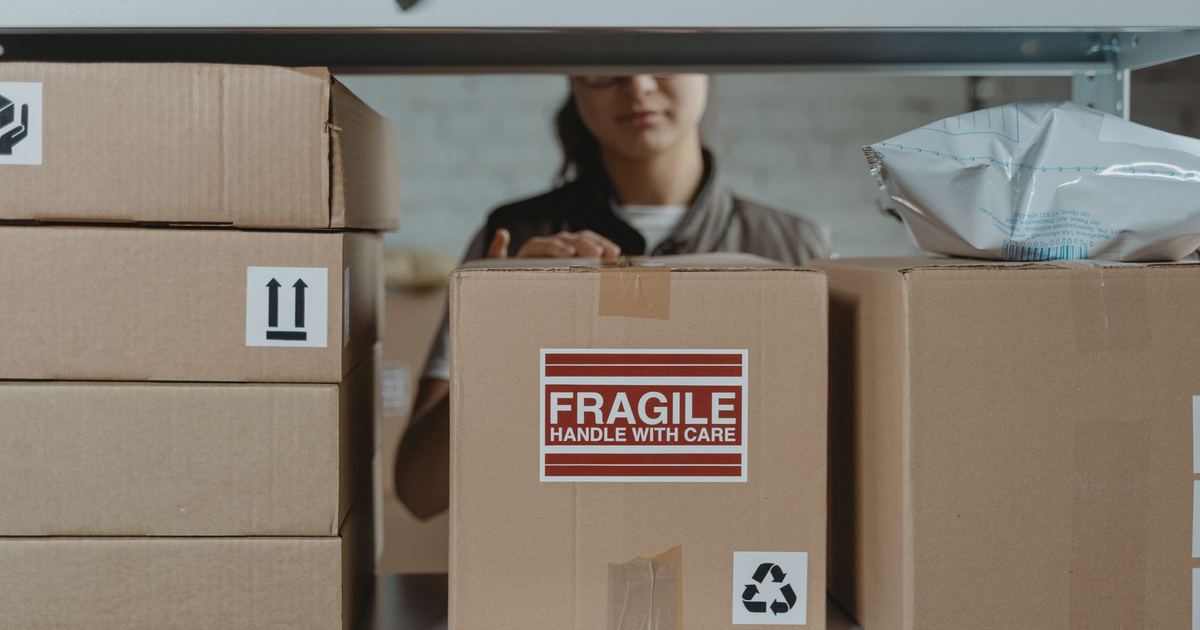
Packaging used for dangerous goods must be UN-tested and certified. Depending on the level of danger (Packing Group I, II or III), the packaging has different requirements for strength and load-bearing capacity. In addition, hazard labels and handling labels must be clear and of the correct size and position as required, so that operators along the supply chain can identify them quickly.
3. Documentation and customs declaration
The document set for DG is much more complex than for general cargo. In addition to the basic import-export documents, businesses must prepare a Dangerous Goods Declaration (DGD). In Vietnam, depending on the type, imported chemicals may have to be declared through the National Single Window portal; domestic transport of certain dangerous goods also requires a transport permit under current regulations.
Choosing a transport mode: air or sea?
Depending on the nature of the goods, the volume and the time requirements, businesses can choose a suitable shipping solution. The basic comparison table below helps in making the decision:
| Criteria | Air (IATA DGR) | Sea (IMDG Code) |
|---|---|---|
| Transit time | Very fast (1-5 days) | Slow (7-45 days depending on the route) |
| Cost | High, charged by weight/volume | Lower, suited to large volumes |
| Quantity limits | Strictly limited per package | Fewer restrictions, can ship as a full container (FCL) |
| Safety | Extremely strict control rules | Strict requirements for stowage plans on board the vessel |
For small shipments, electronic components containing lithium batteries or urgent chemical samples, air freight is the best choice. Conversely, for production raw materials, fertilizers or large volumes of flammable liquids, sea freight (FCL or LCL DG) can save businesses significant costs.
Benefits of Door-to-Door end-to-end forwarding
Instead of handling each stage yourself or hiring several separate providers, an end-to-end Door-to-Door forwarding solution gives the shipper complete peace of mind:
- Centralised risk control: A single provider is responsible from pickup at the warehouse, repacking (if needed) and customs declaration through to delivery to the consignee.
- In-depth advice: Logistics specialists advise on the best shipping plan from the moment the goods are still in the warehouse, helping avoid errors that cause delays.
- Optimised hidden costs: Smooth coordination between stages helps minimise storage fees, penalties for incorrect declarations and the cost of handling incidents at the port.
VPL - A trusted partner for dangerous goods solutions
At Viet Power Logistics (VPL), we understand that every dangerous goods shipment is a commitment to safety. Headquartered in Ho Chi Minh City, VPL provides DG shipping solutions that strictly comply with international regulations and Vietnamese law. We do not just move goods; we provide peace of mind for your business's sustainable growth.
Whether by air or by sea, whether LCL or full container FCL, our team is always ready to help businesses handle difficult cargo that demands technical expertise and strict procedures.
This article is for general information and was compiled by VPL from public sources at the time of publication. Regulations may change – please contact VPL for advice on your specific shipment.