

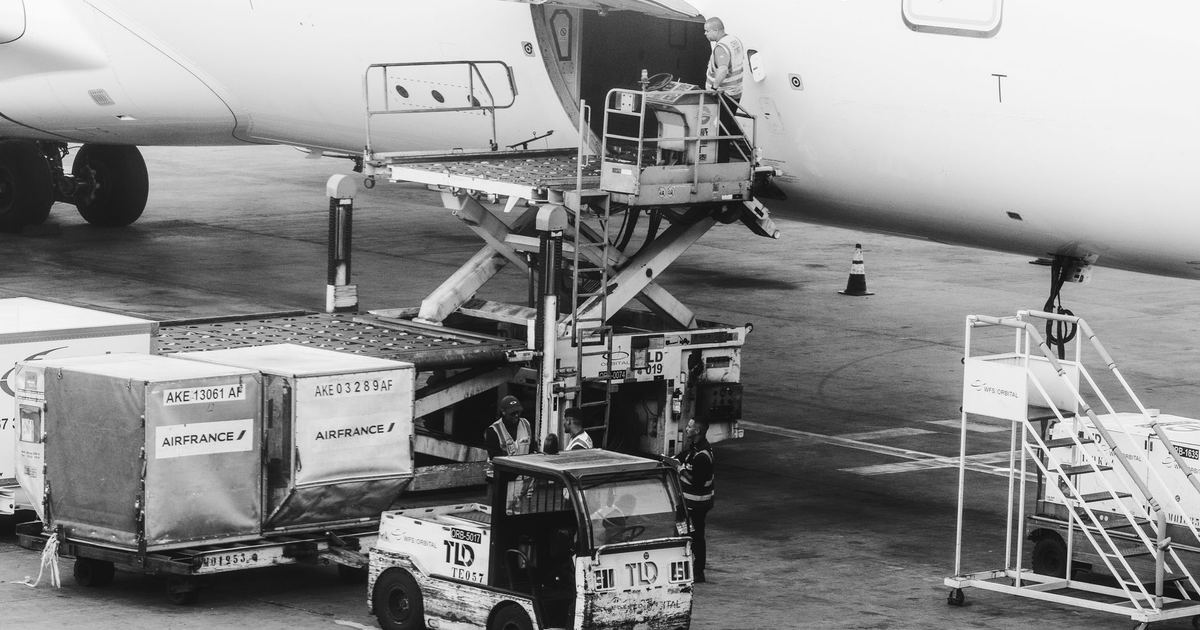
- Documentation errors are the leading cause of delayed shipments.
- Packaging that is not UN-specification or does not suit the hazard class is rejected immediately.
- Labelling and marking errors that do not meet IATA DGR standards.
- Discrepancies between the declared information and the actual goods at airport inspection.
Why is dangerous goods cargo often rejected at the airport?
Transporting dangerous goods (DG) by air is one of the most demanding logistics operations. Unlike ordinary cargo, dangerous goods carry risks of fire, explosion or toxicity, or otherwise endanger the aircraft and its crew. Airlines and airport cargo terminals therefore apply an extremely strict acceptance check based on the rules of the International Air Transport Association (IATA).
A rejected shipment not only delays delivery but also incurs many costs, such as storage fees, return transport, repacking and even penalties from the authorities. At VPL, we have identified the most common mistakes to help companies prevent them at the cargo preparation stage.
1. Errors in the dangerous goods transport documents
Documents are the heart of a dangerous goods shipment. Even a small error in terminology or figures can mean the shipment is not accepted for flight.
Invalid Safety Data Sheet (MSDS/SDS)
The MSDS is the basic document for determining the hazards of the goods. Common problems include an MSDS that is too old (not updated to the latest DGR edition), missing information in Section 14 (Transport Information), or a product name on the MSDS that does not exactly match the name on the invoice and the package.
The Shipper's Declaration for Dangerous Goods
This is the most important document. Common errors include spelling mistakes in the Technical Name, a wrong UN number, a wrong Packing Group, or a signatory who does not hold valid dangerous goods training certification. In addition, every correction on the declaration must be countersigned by the shipper; the use of correction fluid, or corrections without a signature, will result in rejection.
2. Packaging that does not meet UN specifications
Most dangerous goods must be packed in packagings that have been tested and assigned a UN code.
- Wrong type of packaging: Each type of dangerous goods has different packaging requirements. For example, a flammable liquid in Packing Group II requires packaging marked X or Y; if the shipper uses packaging marked Z (suitable only for Packing Group III), the shipment will be rejected.
- Unsatisfactory packaging condition: Dented, dirty, leaking or damp cartons are considered unsafe.
- Improper reuse of old packaging: When reusing wooden boxes or cartons, if the warehouse does not completely remove the old labels and marks from the previous shipment, airport staff will refuse the cargo because they cause confusion in identifying the hazard.
3. Labelling and marking errors on packages
Labels allow handling staff to recognise the type of hazard and how to deal with the goods in an emergency.
| Type of error | Common mistakes |
|---|---|
| Label position | Labels placed on corners and edges so that they are folded, overlapping each other or covered by pallet wrap. |
| Size and colour | Self-printed labels that are not the standard size (usually 100 mm x 100 mm), have the wrong colours, or are printed so faintly that they are hard to recognise. |
| Missing additional labels | Missing handling labels such as "Orientation Arrows" for liquids, or "Cargo Aircraft Only" for goods forbidden on passenger aircraft. |
In addition to hazard labels, marks such as the names of the shipper and consignee, the UN number and the Proper Shipping Name must be clearly printed, must not fade, and must be durable in the transport environment.
4. Discrepancies between the actual goods and the declaration
When cargo arrives at the airport, inspectors compare the actual goods with the declaration and the air waybill (AWB). The following discrepancies commonly lead to a shipment being held:
- Weight mismatch: The actual net weight of the chemical inside the package exceeds the maximum permitted per package under the Packing Instruction.
- Number of packages: The actual number of packages differs from the number stated in the Shipper's Declaration.
- Hidden DG: A company unknowingly ships dangerous items inside ordinary packages (such as lithium batteries or pressurised aerosol cans) without declaring them. This is a serious violation that can result in heavy administrative penalties.
5. How to avoid rejection: a safe cargo preparation process
To minimise the risk of rejection at the airport, VPL recommends that companies take the following steps:
- Double-check the MSDS: Always ask the manufacturer for the latest MSDS and check Section 14 carefully against the current IATA DGR.
- Train personnel: Make sure the staff who pack the cargo and prepare the documents hold valid DG certification and understand the technical requirements.
- Use quality packaging materials: Buy UN packagings only from reputable suppliers and always keep the test certificates with them.
- Photograph the cargo before release: Keeping photos of the packages after labelling and palletising helps in dealing with the airport warehouse if there is any dispute about the condition of the packaging.
At VPL, we understand that every minute of delay at the airport affects a company's reputation. Beyond transport, VPL provides advice from checking the MSDS and guidance on UN-standard packing to preparing the Shipper's Declaration for the shipper to sign.
Transporting dangerous goods demands meticulous attention and strict compliance. Rather than facing complex regulations alone, companies can rely on VPL's end-to-end solution to keep their shipments on schedule and as safe as possible.
This article is for general information and was compiled by VPL from public sources at the time of publication. Regulations may change – please contact VPL for advice on your specific shipment.