

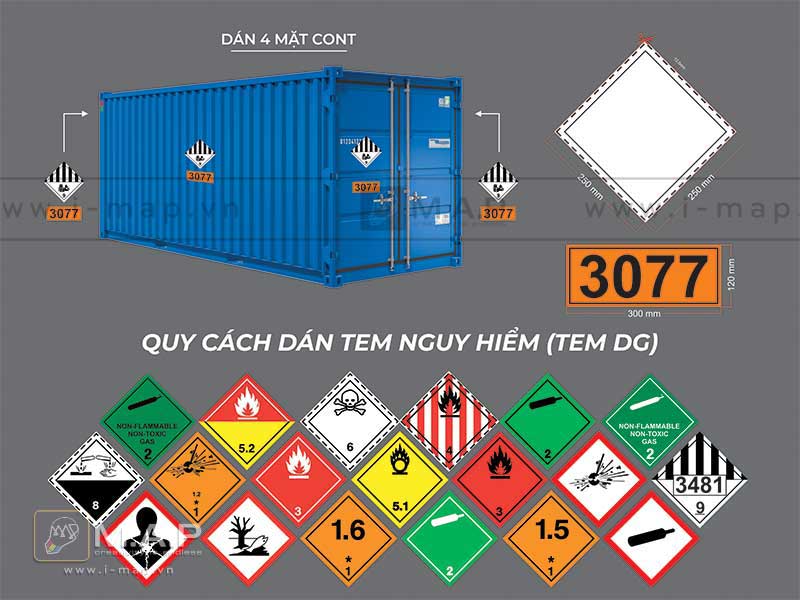
- The IMDG Code is mandatory under SOLAS Chapter VII for packaged dangerous goods carried on ships.
- Amendment 42-24 is mandatory from 01/01/2026; Amendment 43-26 applies voluntarily from 01/01/2027 and becomes mandatory on 01/01/2028.
- Sea transport adds marine pollutants, segregation tables and the container packing certificate.
- Documents that meet the standard for one mode do not automatically meet the standard for the other.
When it comes to dangerous goods (DG), many shippers are familiar with the IATA air transport regulations. But if the shipment travels by sea, the applicable rulebook is the IMDG Code of the International Maritime Organization (IMO). The two systems share the same UN number system and 9 hazard classes, but differ in many practical details. This article gives you the big picture before you prepare your documents.
What is the IMDG Code and is it mandatory?
The IMDG Code (International Maritime Dangerous Goods Code) sets out the classification, packing, marking, labelling, documentation and stowage requirements for dangerous goods carried by sea in packaged form. Chapter VII of the SOLAS Convention requires the carriage of packaged dangerous goods to comply with this Code, so it is mandatory for member States rather than merely a reference guideline. Under SOLAS, a ship carrying packaged dangerous goods must also have a special list, manifest or stowage plan showing the classes of goods and their location on board.
Unlike the IATA DGR (published annually on the basis of the ICAO Technical Instructions), the IMDG Code is amended on a two-year cycle.
Versions in force: Amendment 42-24 and 43-26
| Version | Voluntary application | Mandatory from |
|---|---|---|
| Amendment 42-24 | 01/01/2025 | 01/01/2026 |
| Amendment 43-26 (adopted at MSC 111, May 2026) | 01/01/2027 | 01/01/2028 |
So at present (October 2026) the mandatory version is Amendment 42-24, and companies can start familiarising themselves with 43-26 before it becomes mandatory. Some notable changes in 42-24 concern batteries and battery-powered vehicles:
- UN 3171 (battery-powered vehicle) is no longer used for vehicles powered by lithium-ion or sodium-ion batteries. Instead, use UN 3556 (lithium-ion), UN 3557 (lithium metal) and UN 3558 (sodium-ion).
- Lithium batteries installed in cargo transport units (UN 3536) are assigned stowage category D: carried on deck only, in closed cargo transport units.
- Lithium battery-powered vehicles may be carried unpackaged if they are self-supporting and adequately protected so that the battery is not damaged.
Amendment 43-26 continues to adjust the provisions on batteries and vehicles (including electric vehicles), adding new special provisions and UN numbers for lithium and sodium-ion battery systems. Details should be checked against the official IMO text before application.
How does sea transport differ from air transport?
| Topic | Sea (IMDG) | Air (IATA DGR) |
|---|---|---|
| Regulatory basis | IMO IMDG Code, amended every 2 years | IATA DGR based on the ICAO Technical Instructions, updated annually |
| Marine pollutants | A distinct concept; must be marked and shown on the documents | Mainly relevant only when the cargo moves to sea transport |
| Segregation during stowage | Detailed segregation tables between classes of goods on board and within containers | Loading provisions exist but work differently |
| Specific documents | Container/vehicle packing certificate | Shipper's Declaration; no container packing certificate |
| Level of strictness | Generally more flexible for the same UN number | Generally stricter: tight quantity limits and many State/operator variations |
This does not mean sea transport is "easier". A shipment accepted by sea may be refused on an aircraft, and conversely documents that meet air requirements do not automatically meet sea requirements. In both directions the documents need to be redrawn, and the packaging, labels and marks rechecked.
On marine pollutants, both the IMDG Code and IATA provide exceptions for single or combination packagings containing 5 litres or less of liquid or 5 kg or less of solid, but the packaging requirements under each system are not the same.
Checklist for preparing a DG shipment by sea
- Determine the correct UN number, proper shipping name and hazard class based on the manufacturer's SDS/MSDS.
- Check packaging and labels: UN-specification packaging, danger labels, and the marine pollutant mark where applicable.
- Prepare the Dangerous Goods Declaration (DG Declaration) consistently with the booking, commercial invoice and packing list.
- Obtain acceptance from the shipping line before booking, as each carrier and each port may have its own policy.
- Pack, lash and segregate as prescribed, together with the container packing certificate.
- Confirm the version in force (currently 42-24) and follow the carrier's notices on the switch to 43-26.
What this means for Vietnamese businesses
For companies importing or exporting chemicals, paint, batteries, cosmetics or equipment containing lithium batteries, mixing up the rules of the two modes is a common cause of shipments being returned or incurring storage charges. Choose the right mode at the quotation stage, then prepare a separate set of documents for each mode. Relevant domestic rules (ports, customs, specialised inspection) should also be checked against the documents in force at the time of shipment.
VPL can help check DG documents, advise on packing, and prepare documentation and bookings for both modes of transport. You can contact us for advice on your specific shipment before booking.
This article is for general information and was compiled by VPL from public sources at the time of publication. Regulations may change – please contact VPL for advice on your specific shipment.