

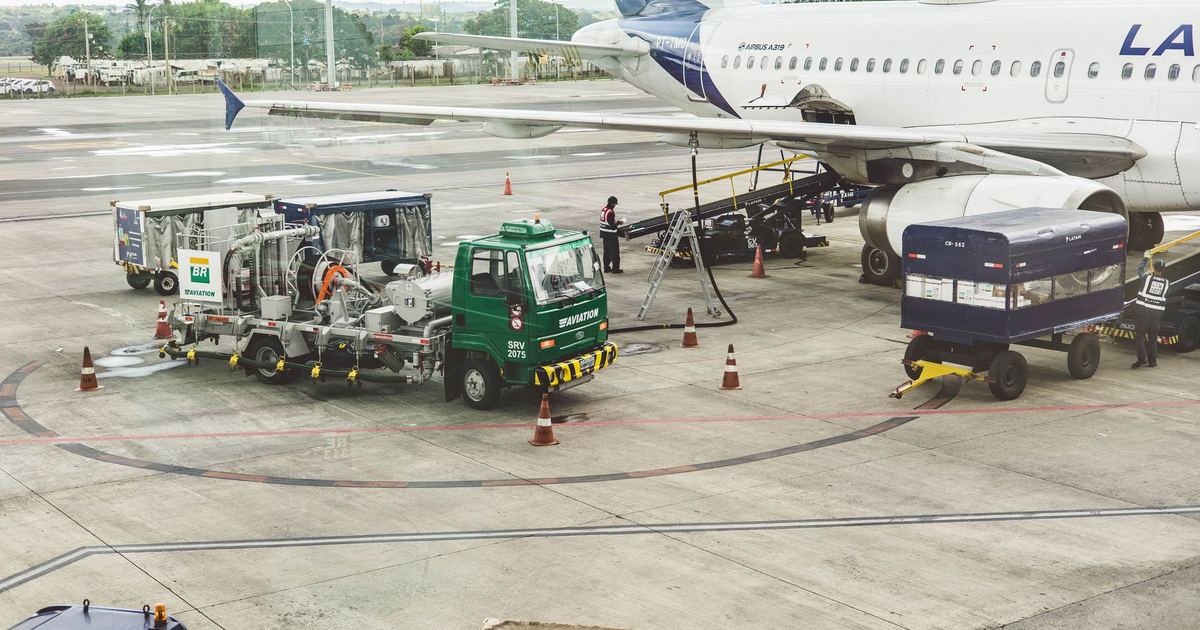
- SAF is a fuel made from renewable feedstocks such as used cooking oil, household waste and agricultural residues.
- Over its life cycle, SAF can cut greenhouse gas emissions by up to 80% compared with conventional fossil fuel.
- It is a 'drop-in' solution, meaning it can be used directly in current aircraft without any change to engine design.
- Businesses can buy verified SAF certificates through airlines or freight forwarders to record Scope 3 emission reductions in their supply chains.
What Is Sustainable Aviation Fuel (SAF)?
Amid global climate change, air transport is under heavy pressure to cut carbon emissions. Sustainable Aviation Fuel (SAF) has emerged as the most practical and effective solution available today. Unlike conventional jet fuel (Jet A or Jet A-1), which is refined from petroleum, SAF is produced from renewable and sustainable feedstocks.
Common feedstocks for SAF production include:
- Used cooking oil and animal fats.
- Municipal solid waste.
- Agricultural and forestry residues (such as straw, rice husks and wood chips).
- Non-food crops grown on marginal land that do not compete with food production.
The most distinctive feature of SAF is that it is 'drop-in'. This means SAF is blended with conventional jet fuel (under current standards, up to a maximum blend of 50%) and used directly in existing aircraft engines and refueling infrastructure without technical modification. At Viet Power Logistics (VPL), we see this as an important turning point for keeping global cargo moving while staying responsible towards the environment.
Why Is the Air Transport Industry Pushing SAF?
Aviation accounts for a significant share of global greenhouse gas emissions. To reach the net zero target by 2050 committed to by the International Air Transport Association (IATA), an energy transition is essential.
1. Outstanding emission reduction
Although SAF still releases CO2 when burned in an engine, that CO2 was previously absorbed from the atmosphere by the biological feedstock as it grew (for crops) or is emission that is being reused (for waste). Measured across the entire life cycle, from production to consumption, SAF can reduce carbon emissions by up to 80% compared with fossil fuel.
2. Meeting strict regulatory requirements
Many regions of the world, especially the European Union (EU), are applying strict SAF mandates to flights departing from their airports. Under the ReFuelEU Aviation regulation, fuel suppliers at EU airports must blend at least 2% SAF from 2025, 6% by 2030 and 70% by 2050, and airlines must uplift most of their fuel at EU airports. Violators are fined, and the cost of SAF is partly passed on in freight rates.
3. Ensuring energy security
Diversifying fuel sources helps the aviation industry reduce its dependence on crude oil price swings and geopolitical risks. SAF can be produced locally from available waste, creating a more self-reliant and sustainable energy supply chain.
Benefits for Vietnamese Importers and Exporters
You may wonder: 'What does the fuel an airline uses have to do with our costs and operations?' In fact, the impact will be very clear in the near future:
- Lower Scope 3 emissions: For large companies that publish sustainability (ESG) reports, emissions from transporting goods (Scope 3) are an important indicator. Using air routes with SAF commitments helps a business strengthen its profile with international partners.
- Meeting international customer requirements: many importers in the EU, the US and Japan require suppliers to report supply chain emissions; low-emission transport helps improve an ESG profile. (The EU's CBAM mechanism currently applies only to certain sectors such as steel, aluminium, cement and fertilizers and does not yet count transport emissions.)
- Building a sustainable brand: Working with logistics providers such as VPL on green solutions helps a business demonstrate its brand values and social responsibility.
Current Challenges
Although the potential is huge, SAF still faces several barriers that keep it from replacing fossil fuel entirely in the short term:
| Criterion | Conventional fuel | SAF |
|---|---|---|
| Price | Low, stable with the oil market | 2-4 times higher due to production costs |
| Supply | Abundant, with a global distribution system | Still limited, in the scale-up phase |
| Infrastructure | Readily available | Fully compatible (drop-in) |
Today, airlines and major freight forwarders are working to offset this cost gap through carbon credit programs or green surcharges, in order to encourage SAF production at a larger industrial scale and bring down its cost.
Conclusion and Solutions from Viet Power Logistics (VPL)
Sustainable aviation fuel is no longer a distant concept but is gradually becoming the new standard of the global logistics industry. At Viet Power Logistics (VPL), we keep up with the latest trends from IATA and airlines so that we can advise customers on the best shipping solutions, not only in terms of time and cost but also in how environmentally friendly they are.
Whether your business ships general cargo or sensitive goods and dangerous goods (DG) by air, VPL is committed to providing professional service in compliance with the latest international regulations, helping keep your supply chain smooth and sustainable. Contact our team of experts in Ho Chi Minh City for detailed advice on a green transport roadmap for your business.
This article is for general information and was compiled by VPL from public sources at the time of publication. Regulations may change – please contact VPL for advice on your specific shipment.