

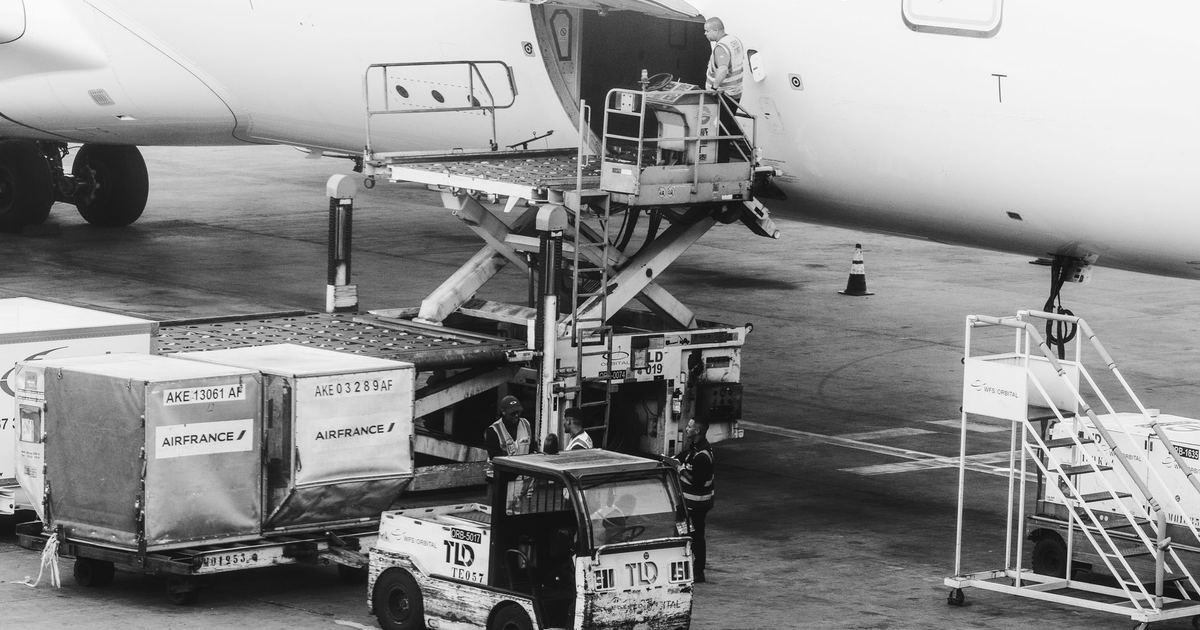
- An AWB serves as evidence of the contract of carriage and receipt of cargo, not a document of title.
- Under the Vietnam Maritime Code 2015, a B/L also represents title to the goods and comes in three forms: straight, to order, and bearer.
- Sea waybills and telex releases expedite cargo release but are not suitable for every commercial transaction.
- Transport document selection must align with the payment method and whether cargo may be traded in transit.
Two Documents, Two Distinct Roles
In import-export documentation, both the Air Waybill (AWB) and the Ocean Bill of Lading (B/L) are issued by the carrier and acknowledge that the cargo has been handed over for carriage. However, their legal nature and practical applications differ substantially, and confusing the two is a common cause of delivery delays, payment bottlenecks, and contractual disputes.
The key takeaway: an AWB is primarily evidence of the contract of carriage and a cargo receipt, not a document of title. Conversely, a negotiable B/L acts simultaneously as evidence of the contract of carriage, a receipt of goods, and a document of title conferring ownership of the cargo.
Air Waybill (AWB)
- Functions: serves as evidence of the contract of carriage between the shipper and the airline, as well as a receipt acknowledging that the airline has accepted the cargo. The conditions of contract are typically printed on the reverse side.
- Non-negotiable (not a document of title): holding an AWB does not convey ownership of the goods; cargo is released directly to the named consignee on the waybill.
- No original document required for cargo release: the airline or handling agent generally releases cargo to the named consignee upon identity verification and customs clearance, without requiring the surrender of an original document as in the case of certain B/Ls.
- AWB tracking number: each consignment is assigned a unique number used for end-to-end milestone tracking.
- Electronic issuance (e-AWB): along trade lanes, carriers, and forwarders enabled with electronic data interchange (EDI), paper AWBs can be replaced with digital records.
Regarding the international legal framework, the Montreal Convention 1999 stipulates that an air waybill shall be delivered for the carriage of cargo (Article 4), permitting any other means which preserves a record of the carriage to be substituted; furthermore, pursuant to Article 9, non-compliance with documentation provisions (Articles 4 to 8) does not affect the validity of the contract of carriage, which remains subject to the rules of the Convention, including carrier liability limits.
Ocean Bill of Lading (B/L)
Under the Vietnam Maritime Code 2015, a bill of lading is a transport document that serves as evidence of the contract of carriage by sea, proof that the carrier has received the goods, and a document of title conferring the right to dispose of and receive the cargo (Article 148). Bills of lading are issued in three forms, each governing transferability and consignee determination differently:
| B/L Form | Characteristics | Lawful Consignee |
|---|---|---|
| Straight B/L | Specifies consignee name and address; non-negotiable | Named party on the bill of lading |
| Order B/L | Transferred by endorsement | Endorsee or holder of the endorsed bill |
| Bearer B/L | No named consignee; transferred by simple delivery | Bearer presenting the bill of lading |
Consequently, with an order or bearer B/L, the holder of the original document exercises constructive possession over the cargo and can trade the consignment while in transit. This is also why issuing banks routinely require a full set of original negotiable B/Ls under documentary credit (L/C) terms.
Alongside traditional B/Ls, the sea waybill is non-negotiable and provides for cargo release to the named consignee, making it faster and eliminating the risk of lost documents; however, it is unsuitable for cargo sold in transit or where banks demand a document of title. For original B/Ls, carriers often offer a telex release facility: the original B/Ls are surrendered at the port of loading, prompting the ocean carrier to authorize cargo release at the discharge port without presentation of physical bills. According to the TT Club, shipping lines are not legally obligated to provide this service, and operators must remain vigilant against email fraud.
Quick Comparison
| Criteria | AWB | B/L |
|---|---|---|
| Mode of Transport | Air Freight | Ocean Freight |
| Document of Title | No | Yes (for order/bearer forms) |
| Negotiability | Non-negotiable | Subject to B/L form |
| Cargo Release | Named consignee upon ID check | Presentation/endorsement per B/L form, or telex release |
| Electronic Version | e-AWB | Electronic B/L or telex release, subject to carrier |
Practical Considerations for Vietnamese Enterprises
- Verify consignee details: on AWBs and straight B/Ls, discrepancies in the consignee's legal name, address, or tax ID can stall destination clearance and release, particularly for cargo subject to special documentation.
- Cross-document consistency: cargo description, piece count, and gross weight on the waybill or B/L must strictly align with the commercial invoice, packing list, and customs declaration.
- Align document type with payment terms: Letter of Credit (L/C) settlements generally require original negotiable B/Ls; advance wire transfers (T/T) or open-account terms between trusted trading partners can utilize sea waybills to eliminate documentary courier lead times.
- Dangerous goods: whether transported by air or sea, dangerous goods necessitate separate statutory declarations and technical documentation under mode-specific regulations (IATA DGR / IMDG Code); the transport document is only one component of the compliance dossier.
- Clarify carrier terms: facilities such as telex release or e-AWB remain subject to individual carrier capabilities and specific trade lane protocols.
VPL assists shippers with comprehensive document review, booking, and multimodal freight solutions across air and ocean sectors, including dangerous goods consignments. If you need guidance selecting the optimal transport document for your upcoming shipment, contact our team prior to booking placement.
This article is for general information and was compiled by VPL from public sources at the time of publication. Regulations may change – please contact VPL for advice on your specific shipment.